Want to Start Selling Online? Here Are Two Ways to Do It
One path is faster. The other is bigger. Here is how to figure out which one fits where you are right now.
E
Edriis Franklin
September 27, 2026
Most people with a product idea spend months overthinking the setup. They watch YouTube tutorials, collect browser tabs, and never actually launch anything. If that sounds familiar, this is for you. We are going to skip the noise and talk about two concrete paths to selling online, what they actually involve, and how to take your first real step today.
No technical background required. No big budget assumed. Just two options, laid out honestly, so you can stop researching and start moving.
First, Understand What You Are Actually Trying to Do
Before you pick a platform, get clear on one thing: are you trying to test a simple idea quickly, or are you trying to create an actual online business you can grow over time? Both are valid goals. But they call for different tools. Picking the wrong one wastes your time and, sometimes, your money.
Here is how to think about it. If you want to slap a design on a t-shirt or a mug and see if anyone buys it, that is a test. If you want to sell products online under your own brand name, control the customer experience, and eventually scale into something real, that is a business. The setup looks different in each case.
Option One: Spring (Formerly Teespring) for Quick Merch Testing
Spring is a print-on-demand platform. You upload a design, put it on products like shirts, hoodies, phone cases, or mugs, set your price, and share your store link. When someone buys, Spring prints and ships the item. You keep the margin between your price and their base cost. You never touch inventory. You never pay upfront.
This is a legitimate way to test whether people will actually pay for something you create. If you have an audience, a following, a community, or even just a group of people who share a specific interest, Spring gives you a fast way to see if merch around that interest has legs. A lot of creators use it for exactly that reason.
Free to set up, no monthly fees
No inventory or shipping to manage
Good for branded merchandise around a personality or community
Fast to get live, sometimes within a day
Limited to print-on-demand product categories
The honest limitation of Spring is that it is largely a merch platform. You are selling inside their ecosystem, on their terms, with their product catalog. You do not own the customer relationship the same way you would with your own store. You cannot easily add email marketing, run loyalty programs, bundle products strategically, or connect to outside suppliers. The ceiling on what you can build there is relatively low.
Spring is a solid starting point if you want to test a design or a concept with zero financial risk. It is not the foundation for a serious ecommerce business. Think of it as a proving ground, not a destination.
Option Two: Shopify for an Actual Online Store You Own
Shopify is where the conversation about how to start an online store usually ends up, and for good reason. It is the platform most independent sellers use when they want to run a real ecommerce operation under their own brand. You pay a monthly fee (plans currently start around $39 per month, with a free trial to get going), and in return you get a fully functional store that you control from top to bottom.
Your store lives at your own domain. Customers check out on your site. You collect their email addresses. You decide the layout, the branding, the product pages, the pricing strategy. Nobody else's logo is in the way. That might sound like a small thing, but when it comes to building customer trust and repeat business, it matters a lot.
For anyone seriously researching how to start selling online, Shopify for beginners is genuinely approachable. The setup wizard walks you through adding products, connecting a payment processor, and configuring shipping. You do not need to know how to code. You do not need to hire a developer. Most people get a functional store live within a weekend.
What Makes Shopify Different: The Ecosystem
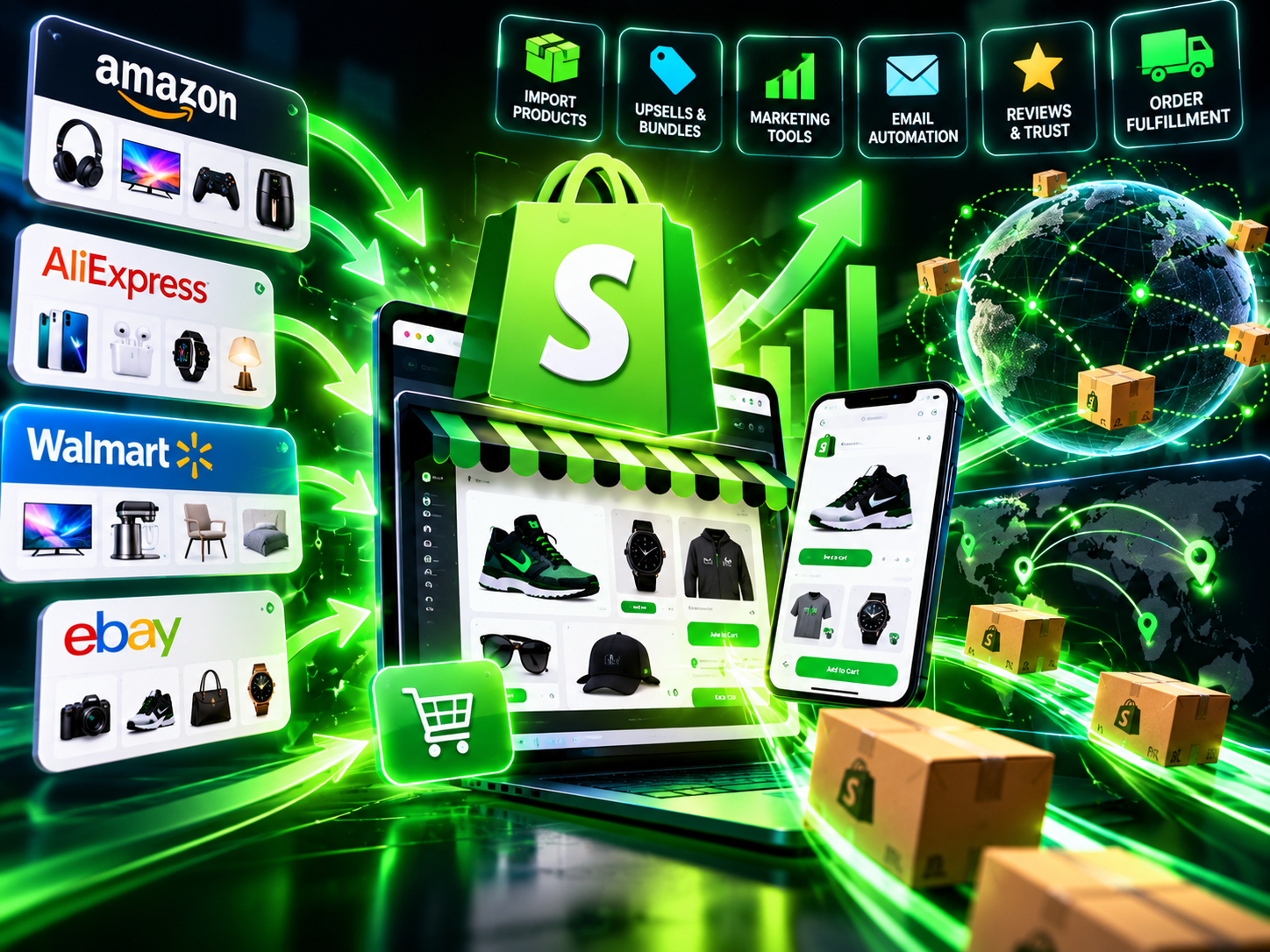
The real advantage of Shopify is not the store itself. It is everything you can connect to it. The Shopify App Store has thousands of apps, and that is where the platform goes from a simple storefront to a full business operation. This is what actually separates it from simpler platforms when you are trying to sell products online at scale.
Consider a few examples of what that ecosystem makes possible:
Print-on-demand: Apps like Printful or Printify connect directly to your Shopify store, so you can sell custom products without holding inventory, similar to Spring but under your own brand
Dropshipping: Source products from suppliers and sell them without stocking anything yourself. Apps in this space can connect you to products from AliExpress, US-based suppliers, and more
Supplier and marketplace integrations: Depending on the apps and services you use, you can explore workflows that touch platforms like Amazon, Walmart, and eBay
Email marketing: Tools like Klaviyo or Shopify Email let you capture customer emails and send campaigns that actually bring people back to buy again
Upsells and bundles: Show customers related products or package deals at checkout to increase your average order value
Reviews and social proof: Automatically collect and display product reviews to build trust with new visitors
Subscriptions: Offer recurring purchases for consumable products, which creates predictable monthly revenue
That list is not meant to overwhelm you. You do not set all of that up on day one. The point is that Shopify grows with you. You can keep it simple at the start and add tools as your business actually needs them.
What Does It Actually Cost to Get Going on Shopify?
Let's be straight about the numbers. Shopify's basic plan runs about $39 per month after the trial period. That covers your store, unlimited products, and the core features most new sellers need. If you go the print-on-demand route using a free app like Printify, your only other cost is the base price of each product when a customer orders. If you are dropshipping, the cost of goods comes out of each sale. Neither of those requires you to buy inventory upfront.
So realistically, a beginner could get a Shopify store live with a print-on-demand or dropshipping setup for under $50 a month in fixed costs. That is not nothing, but it is also not the barrier most people imagine. Compare that to opening a physical retail location, and it looks pretty reasonable.
Shopify regularly offers extended free trials. Check the current offer before you sign up. Getting 30 or 90 days free to test and build gives you real time to figure out your product and make your first sale before you ever pay a monthly fee.
How to Actually Pick Between the Two
Here is a simple way to decide. Answer these three questions honestly:
Do you have a specific design or piece of art you want to put on merchandise for an audience you already have? Spring is probably the faster, lower-risk move.
Do you want to build a store under your own brand name with room to grow, add products, and market to customers over time? Go with Shopify.
Are you somewhere in between, unsure of your product idea and just testing the water? You could start with Spring to validate, then migrate to Shopify once you know something sells.
The migration path is real and people do it. Test cheaply on Spring. Once you see proof that people want what you are offering, take that confidence to Shopify and rebuild it properly on a platform you own.
Your First Step Looks Like This
If you are going the Spring route: Create a free account, pick five products from their catalog that make sense for your idea, upload your design or create one using their design tool, set your prices with at least a few dollars of margin, and share the link somewhere your target audience actually hangs out. That whole process can happen in an afternoon.
If you are going the Shopify route: Sign up for the free trial, spend the first session picking a theme and naming your store. Spend the second session adding your first five products with real descriptions and clean photos. Spend the third session setting up payments and shipping. By session four, you should be ready to share your store with real people and ask for honest feedback before you go fully public.
Neither of these paths requires you to have everything figured out before you start. The people who succeed selling online are not the ones who planned the longest. They are the ones who got something in front of real customers fastest, listened to what those customers said, and adjusted. That feedback loop is the whole game early on.
The One Thing That Trips Most People Up
It is not the platform. It is not the products. The single biggest thing that stops people from making their first sale is spending too long in setup mode and not enough time on getting people to actually look at what they are selling. Your store being 90 percent perfect is better than it never launching because you spent six weeks tweaking fonts.
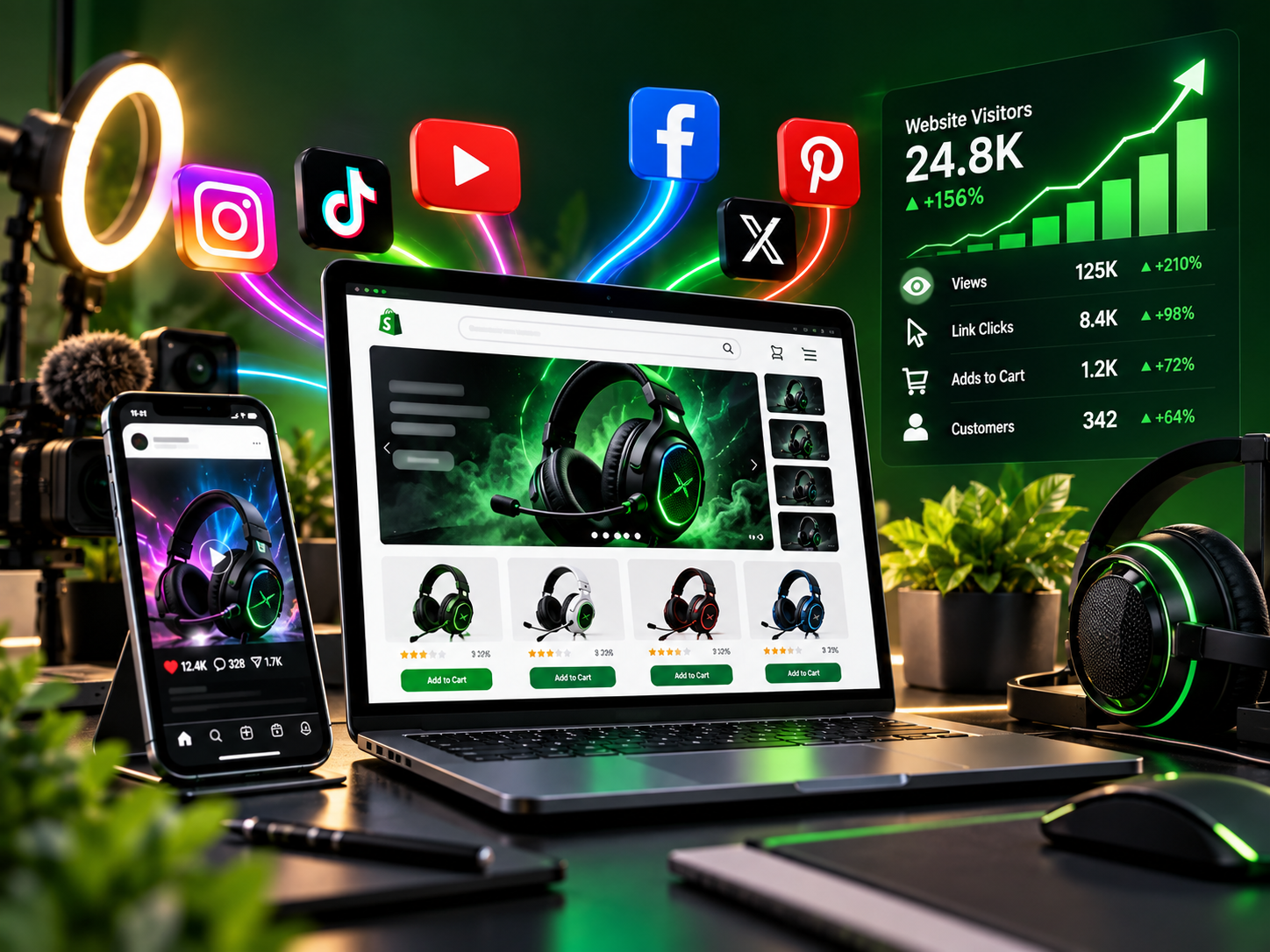
You need traffic. That means telling people about your store, whether that is posting on social media, sending a text to friends, running a small ad, or reaching out to relevant communities. No traffic means no sales, regardless of how good your product is or how clean your store looks. Keep that in mind as you set things up. The store is not the finish line. It is the starting line.