Your Business Is Online. Now You Just Need People to Find It.
A no-fluff guide to getting your first real visitors, without waiting around hoping the algorithm notices you.
E
Edriis Franklin
September 28, 2026
You did the work. You set up the store, picked the name, wrote the about page, maybe even lost sleep over the logo. And now it's live. Congratulations, genuinely. Most people never get that far.
But here's what nobody tells you clearly enough: launching is not marketing. A clean website sitting on the internet does not attract customers the way a physical store on a busy street might attract foot traffic. Online, silence is the default. Nobody shows up unless something sends them there. That something is you.
This guide is about figuring out how to promote an online business when you're new, possibly broke, and definitely unsure where to start. You don't need to do everything. You need to pick a lane, understand what's actually happening when people visit (or don't), and take one real step this week.
Attention Is Not the Same as Sales
Before anything else, get this distinction locked in your head. Traffic and sales are not the same thing. Neither are views and customers. There's a whole chain between someone seeing your name for the first time and actually buying from you, and most beginners collapse it into two steps: post something, make money.
The real chain looks more like this:
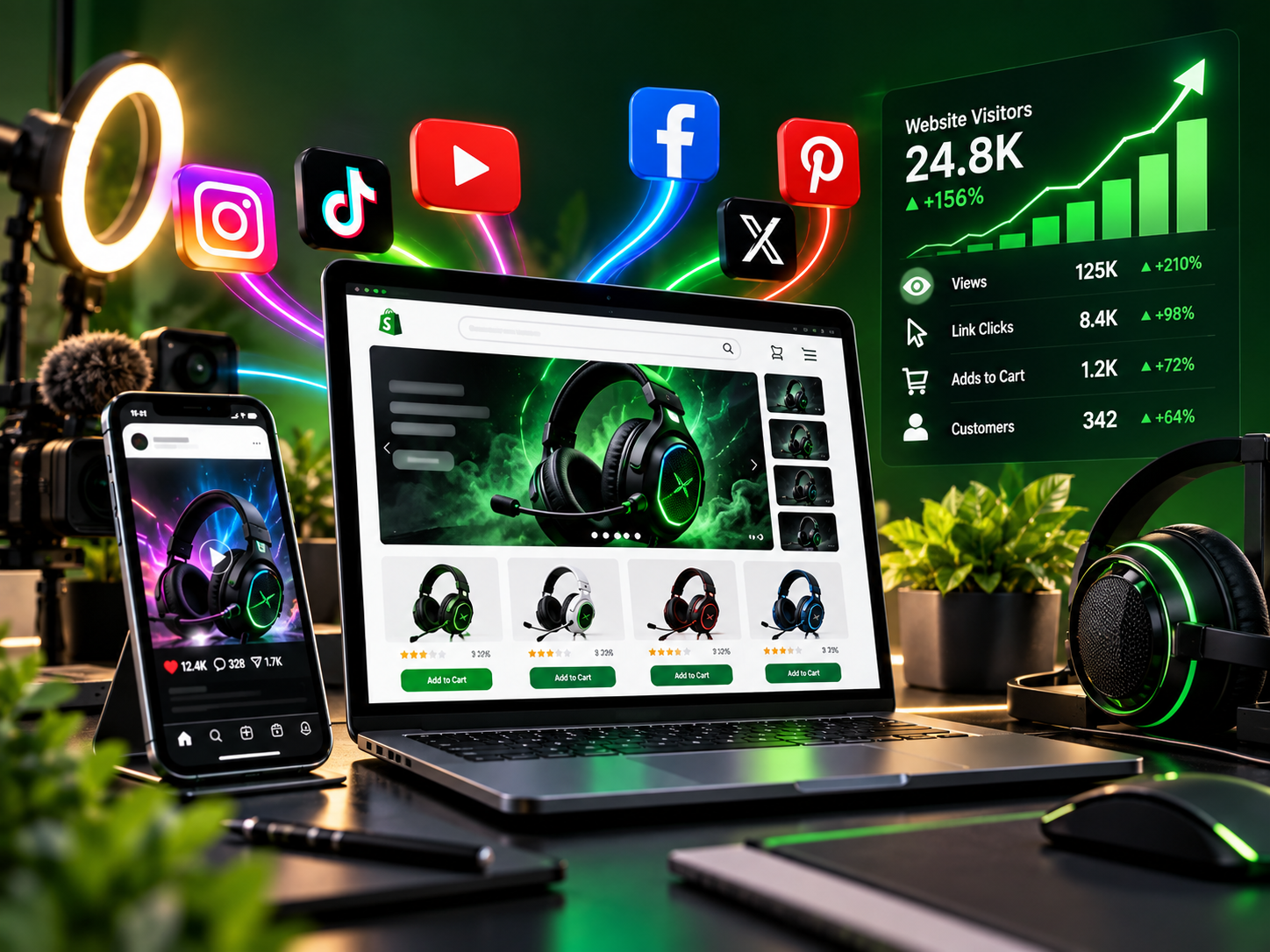
Views: Someone sees your content, ad, or post
Clicks: They're curious enough to tap or click
Visitors: They land on your site or store
Leads: They give you their email or sign up for something
Customers: They buy
Repeat customers: They come back and buy again
This matters because someone can get 10,000 views on a TikTok and make exactly zero sales. That's not necessarily a traffic problem. It might be a conversion problem: weak product page, confusing offer, no trust signals, price that doesn't land right, or zero follow-up after someone leaves. Knowing where your chain is breaking is the difference between working smarter and just posting more stuff into the void.
When you start getting traffic, pay attention to where people drop off. That's the data that actually helps you.
The Traffic Lanes: Pick One, Not All
There are several ways to get traffic to your online store. Trying all of them at once is one of the fastest ways to burn out and see results from none of them. Here's a plain-English breakdown of the main options so you can choose what fits your situation.
Short-form video(TikTok, Reels, YouTube Shorts): High reach potential, no ad spend required, but takes consistency and works best when you enjoy being on camera or can make compelling visuals
Social media content(Instagram, Pinterest, Facebook, LinkedIn): Slower burn than video but builds a presence over time; Pinterest especially drives traffic for product-based businesses
Search engine optimization (SEO): Free, long-term, and powerful once it works. Slow to show results but pays off for months or years. Best for blogs, content-heavy sites, or product pages targeting specific search terms
Online communities (Reddit, Facebook Groups, forums, Discord): You participate, add genuine value, and let people discover you organically. Requires patience and authenticity, not spam
Email marketing: The most underrated channel for beginners. Once someone gives you their email, you have a direct line to them that no algorithm can cut off
Partnerships and collabs: Other creators, complementary businesses, or micro-influencers in your niche can send you a burst of warm, targeted traffic fast
Paid advertising (Meta Ads, Google Ads, TikTok Ads): Fastest way to get eyeballs, but costs money and requires testing. Not recommended until you have at least some proof your offer converts
If you're a total beginner with limited time, the two highest-leverage starting points are usually short-form video (for reach) and email capture (for retention). One brings people in, the other keeps them around long enough to buy.
How to Market an Online Store With Short-Form Video
Short-form video is probably the most accessible free traffic channel available right now. You don't need a production crew or a ring light setup from 2019. You need a phone, something worth saying, and enough consistency to actually show up.
The best-performing videos for online businesses tend to do one of three things: they teach something useful related to your niche, they show the product or service in action, or they tell a real story (yours, a customer's, or the story behind what you sell). Tutorials, behind-the-scenes clips, and honest takes perform better than polished ads.
If you're not comfortable on camera yet, you can create scroll-stopping video content using a tool like InVideo, which lets you produce clean, professional-looking videos with text, voiceover, and visuals without any editing experience. Pair that with well-designed graphics made in Kittl and your content looks credible even if your budget is still small. First impressions matter more online than people admit.
The algorithm doesn't owe you anything. But it does reward people who show up consistently with content that actually helps or interests someone.
E. Franklin
SEO Is Slow. It's Also Worth It.
If you want to know how to get traffic to your online store without paying for ads forever, search engine optimization is part of that answer. It's not fast. Most SEO work takes three to six months to show meaningful results. But traffic from Google is often the most valuable kind because it's people who are actively searching for what you sell.
For beginners, focus on a few basics: make sure your product pages and any blog content use specific phrases your customers actually type into search engines. Don't try to rank for "shoes." Try to rank for "comfortable wide-fit walking shoes for nurses." The more specific, the better your shot at showing up for the right people.
Writing a few genuinely useful blog posts or product guides around topics your customers search for is one of the highest-return things you can do in your first six months. It compounds over time in a way that social media posts rarely do.
Don't Sleep on Communities
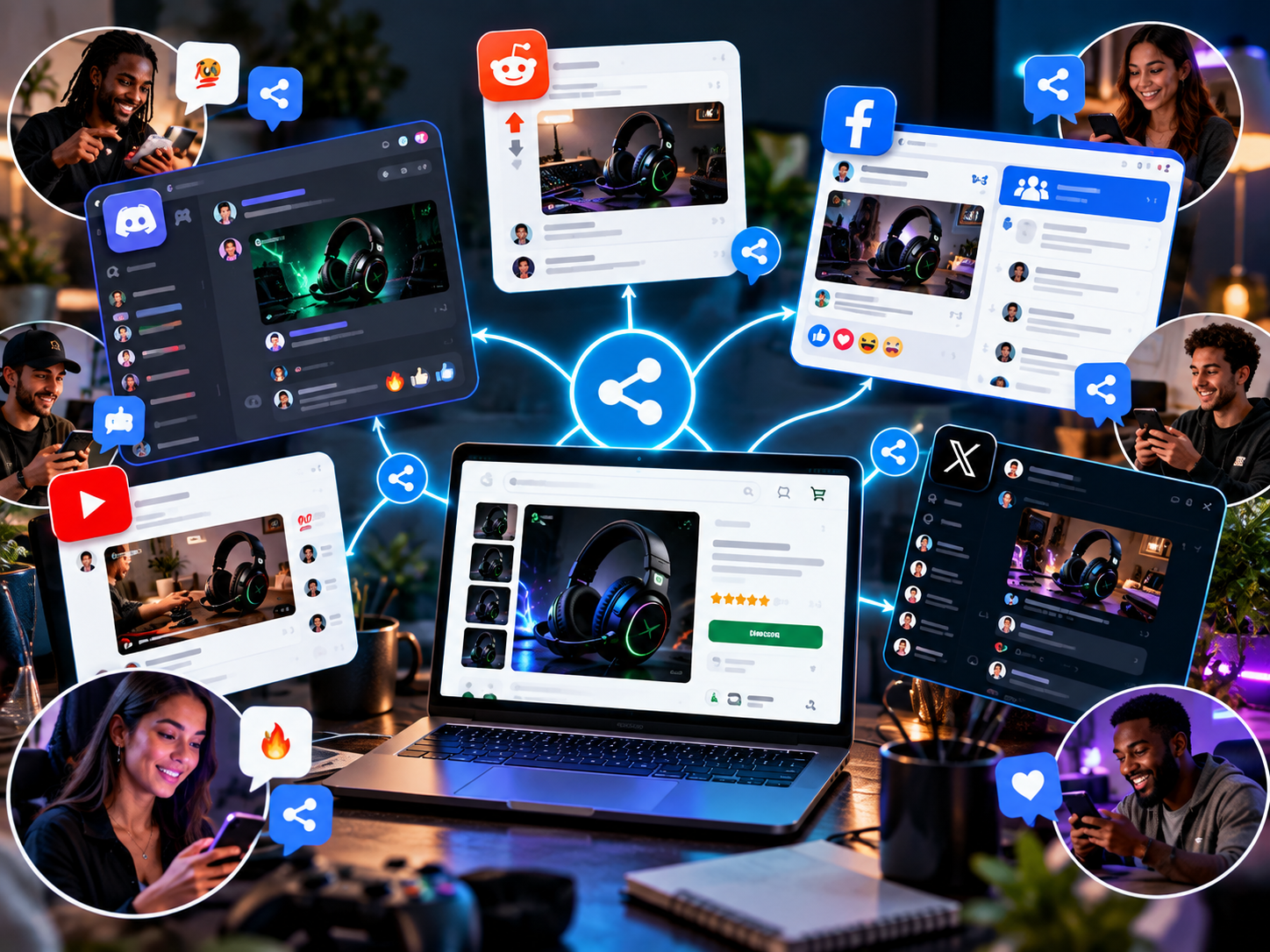
One of the most underused strategies for marketing for beginners is being present in the spaces where your target customers already hang out. Reddit threads, niche Facebook groups, industry Discord servers, even LinkedIn comment sections. These are places where people ask questions your product or service could answer.
The move is not to drop your link everywhere like a bot. That gets you banned and it doesn't work anyway. The move is to be genuinely helpful over time. Answer questions well. Offer real perspective. Mention your business only when it's natural and relevant. People notice, and they click.
One good Reddit comment on the right post in the right subreddit can send you more qualified traffic than a week of posting on a social account with 200 followers. Community is seriously underrated.
Capture Emails From Day One
Every person who visits your site and leaves without giving you their email is, statistically, probably never coming back. That's not pessimism, that's just how online attention works. People are distracted. Life happens. They meant to come back and they didn't.
An email list changes that dynamic. When someone hands you their email, you now have a way to reach them directly, repeatedly, without paying for an ad or hoping the algorithm shows them your post. That is genuinely valuable and most new business owners ignore it entirely.
Set up a simple lead capture from the beginning. A discount code for first-time buyers, a free resource related to your niche, early access to something, whatever makes sense for your business. Then actually send emails. Not every day, but regularly. Useful, interesting, occasionally promotional emails to people who opted in is one of the most cost-effective forms of marketing that exists.
A tool like GoHighLevel handles this well because it combines lead capture, email automation, and follow-up sequences in one place. When someone signs up, they automatically get a welcome email. When they don't buy after a few days, they get a follow-up. That kind of automated follow-up is what separates businesses that convert attention into sales from ones that just get views.
The average customer needs between 5 and 8 touchpoints before they buy. Most businesses give up after one or two. Automated email sequences handle the follow-up so you don't have to do it manually.
Your First 100 Visitors: A Better Goal Than Going Viral
Forget going viral. That's a lottery ticket, not a strategy. Your real first mission is simpler and more useful: get 100 relevant people to your site and pay close attention to what happens.
Not 100,000. Not even 1,000. One hundred people who actually fit your target customer profile. Where did they come from? Which page did they land on? How long did they stay? Did anyone add something to the cart? Did anyone email you? Did anyone buy?
This is the data that tells you everything. If 100 people visit and nobody buys, you probably have a conversion issue, not a traffic issue. Maybe the product description isn't clear. Maybe the price needs context. Maybe there are no reviews or trust signals. Fix those things before you spend money on ads or exhaust yourself chasing views.
If 100 people visit and even two or three buy, you have proof of concept. Now you scale the thing that brought those 100 people in. That's a real strategy.
To get your first 100 relevant visitors, try one of these approaches depending on your situation:
Post three to five short-form videos showing your product or service with a clear call to action in the caption
Find two or three Reddit threads or Facebook group posts where your product is relevant and add a genuinely helpful comment
Reach out personally to 20 people in your network who fit your target customer and ask them to visit and give you feedback
Write one detailed blog post targeting a specific search phrase and share it in relevant communities
Partner with one small creator or complementary business for a simple shoutout or mention
None of these require a budget. All of them require actually doing something today instead of waiting for people to find you on their own.
Stop Waiting. Pick a Lane and Move.
The single biggest mistake new online business owners make is spending more time optimizing their store than actually promoting it. At some point, good enough is good enough, and the only thing that matters is getting real people to see what you built.
You now have a clear picture of how to promote an online business without needing a marketing degree or a big ad budget. You understand the difference between attention and conversion. You know the traffic lanes and how to choose one. You know what your first real milestone looks like.
So here's your actual next step: pick one traffic channel that fits your personality, your business, and the time you have available. Not three. One. Commit to it for 30 days. Track what happens. Adjust based on what you see.
The businesses that figure out marketing for beginners aren't the ones who found some secret shortcut. They're the ones who stopped overthinking it and started showing up. Your store is ready. Now go get people to it.